
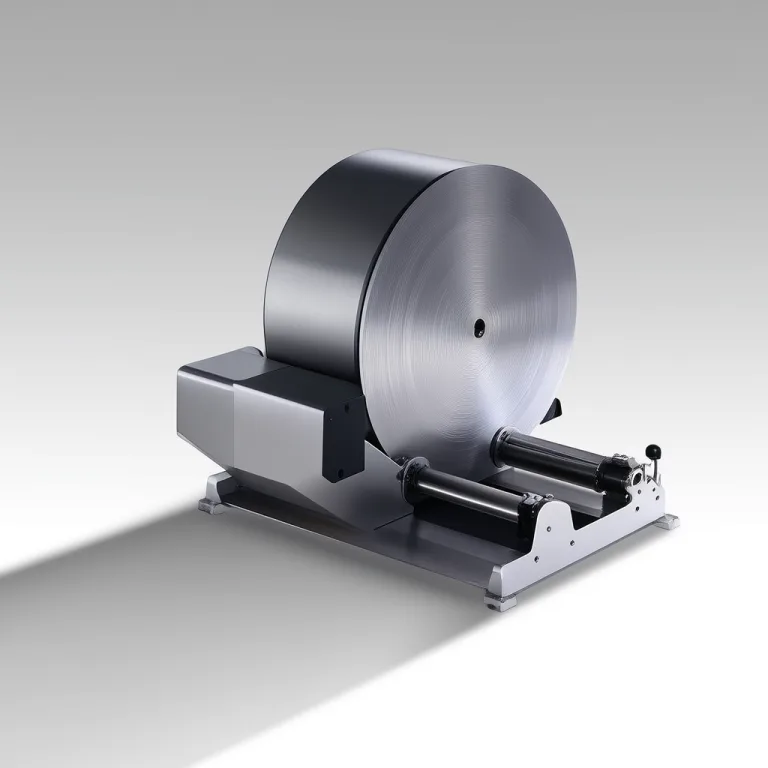
Steel Coil Slitting Line
Steel Coil Slitting Line for industrial applications.
About Steel Coil Slitting Line
Steel Coil Slitting Line for industrial applications.
| Domain | build |
|---|
Who Works With Steel Coil Slitting Line?
9 engineering roles are connected to Steel Coil Slitting Line based on verified research evidence.
Maintenance Technician
Safety Officer
Inspection Technician
Inspection Technician is a widely recognized professional role in industrial engineering, especially in regulated sectors like chemical processing. In the context of Bag Filter Housing — which must comply with material compatibility (e.g., PTFE lining), pressure integrity, explosion venting, and inspection protocols — this role performs critical pre-commissioning, in-service, and post-maintenance inspections. The title is generic (not product-specific), aligning with standard occupational classifications (e.g., O*NET 45-4022.00, ISO/IEC 17020).
Production Supervisor
Production Supervisor is a widely recognized, standardized industrial operations role responsible for overseeing manufacturing processes, shift execution, quality control, and personnel coordination on production lines — directly applicable to operating and managing a Steel Coil Slitting Line. Evidence from production metrics and shift reports confirms operational oversight responsibilities aligned with this product.
Machine Operator
This is a formally recognized U.S. Department of Labor (O*NET/CareerOneStop) occupational title. While broad in scope (covering cutting, punching, and pressing), the evidence explicitly links it to plasma cutting equipment — including the specified DECAPOWER CUT series and CUT80 Air CNC Plasma Cutter Torch. Within the welding/cutting domain, these workers directly operate, monitor, inspect, and troubleshoot plasma cutting machines. 'Machine Operator' is the canonical, generalized professional role; 'Metal Cutting' is a valid functional specialization (not product-specific over-specification) because plasma cutting falls under metal cutting machinery operations.
Control Systems Technician
PLC Technician is a widely recognized industrial technical role focused on programming, troubleshooting, and maintaining PLC-based automation systems — directly relevant to servo motor integration, drive calibration, and motion control system reliability. While 'PLC Technician' is common in industry, 'Control Systems Technician' is the more canonical and inclusive term per IEEE/ISA standards, encompassing PLCs, HMIs, servo drives, and associated field devices. The role explicitly supports servo motor systems via troubleshooting, calibration, and preventive maintenance.
Quality Assurance Technician
Quality assurance personnel is a recognized professional role in industrial engineering contexts, especially critical in chemical applications where compliance with safety and quality standards (e.g., ISO 9001, ASME BPE, or GMP) is mandatory. In the context of Filter Presses for industrial chemical applications, QA personnel inspect manufacturing processes, verify material certifications, witness performance tests (e.g., pressure integrity, filter cloth compatibility), and manage quality documentation. 'Personnel' is generic but maps unambiguously to the standard occupational title 'Quality Assurance Technician' (or Engineer, depending on seniority); however, 'Technician' is the more common and appropriate canonical form for hands-on QA roles tied to equipment verification and compliance checks.
Operations Technician
Drafting Technician
Blueprint Reader is a recognized, though sometimes informal, title for personnel trained to interpret technical drawings (e.g., mechanical, electrical, piping) in industrial manufacturing and installation contexts. In steel coil slitting line projects, this role supports fabrication, assembly, commissioning, and maintenance by verifying alignment, component placement, and interface requirements against as-built and as-designed documentation. While 'Blueprint Reader' is descriptive rather than formalized like 'CAD Drafter', it maps functionally and industry-commonly to Drafting Technician or Engineering Technician — roles explicitly recognized in ANSI, NATEF, and O*NET frameworks for metal fabrication and industrial machinery. It is not product-specific (i.e., not tied exclusively to slitting lines), but is broadly applicable across build-phase activities.