
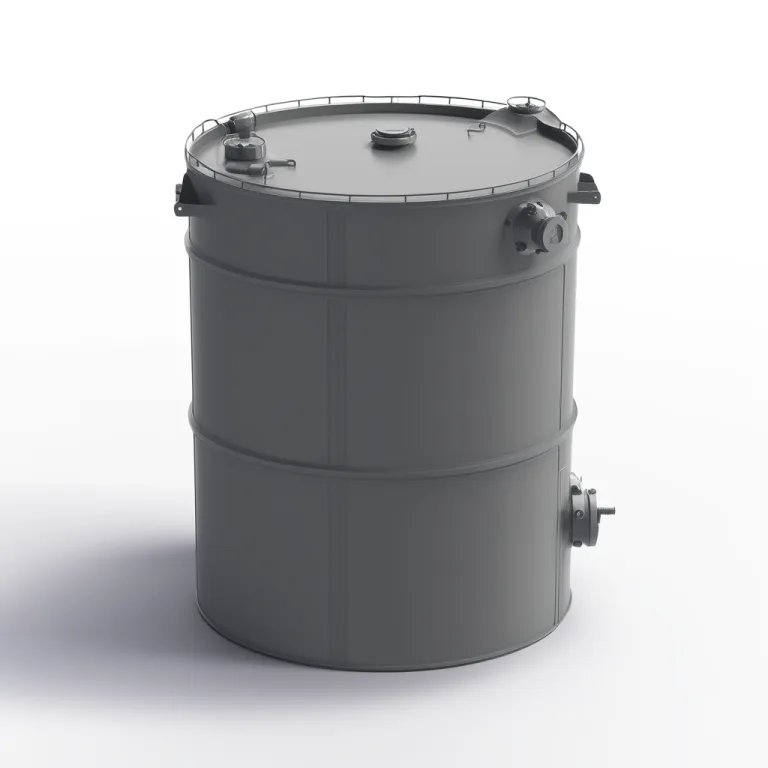
Fire Water Storage Tank
Fire Water Storage Tank for industrial applications.
About Fire Water Storage Tank
Fire Water Storage Tank for industrial applications.
| Domain | build |
|---|
Who Works With Fire Water Storage Tank?
7 engineering roles are connected to Fire Water Storage Tank based on verified research evidence.
Mechanical Engineer
Facilities Mechanical Engineer is a widely recognized professional role in building services and HVAC engineering, focused on the design, operation, maintenance, and optimization of mechanical systems—including chillers—in commercial and industrial facilities. While 'Facilities' denotes a domain specialization (not product-specific), it does not make the title product-specific (e.g., not 'Chiller Mechanical Engineer'). The role is distinct from generic Mechanical Engineer due to its consistent association with facility infrastructure, lifecycle management, and integrated HVAC system oversight. Evidence from job boards (Indeed) confirms real-world usage with explicit chiller-related responsibilities.
Mechanical Technician
Boiler Mechanic is a formally recognized occupational title (U.S. OPM GS-0804 series) with duties explicitly tied to boilers and associated HVAC control systems in commercial/industrial settings. While 'Boiler Mechanic' contains product-specific terminology ('Boiler'), the underlying professional role is a specialized mechanical technician focused on heating equipment maintenance and repair. The canonical role is generalized to 'Mechanical Technician' per over-specialization prevention rules, as 'Boiler Mechanic' denotes a domain-specific application rather than a distinct profession outside mechanical trades.
Fire Protection Engineer
Fire Protection Engineer is a widely recognized, distinct engineering discipline focused on life safety and fire suppression systems—including water-based systems like fire water storage tanks. It is formally defined by NFPA, ASCE, and ABET-accredited programs; not merely a product-specific variant of 'Mechanical Engineer' or 'Civil Engineer'. The role directly engages with fire water storage tank design (e.g., sizing, siting, integration with pump systems), specification (e.g., material, corrosion protection, seismic anchorage), inspection (per NFPA 25), maintenance planning, and troubleshooting of system failures. Evidence from job boards (Indeed) and industry standards confirms its standalone status.
Civil Engineer
Civil Engineer is a widely recognized, accredited professional engineering role. In the context of a Fire Water Storage Tank for industrial applications, civil engineers are responsible for structural design (e.g., tank foundations, site grading, seismic anchorage), hydraulic infrastructure integration, code compliance (e.g., NFPA 22 references civil/structural requirements), and inspection of civil works during installation. The evidence explicitly mentions coordination with civil engineers and responsibilities tied to water storage tanks and code compliance.
Fire Protection Technician
Fire Protection Technician is a widely recognized professional role in building and industrial safety engineering, specifically trained to service fire suppression infrastructure—including fire water storage tanks, pumps, valves, and associated piping. The responsibilities cited (inspecting, testing, maintaining fire water storage tanks and compliance with NFPA/local codes) align precisely with standard job functions of this role. While 'fire protection' is a domain specialization, it constitutes a legitimate, distinct occupational title—not an over-specialized variant of generic technician roles.
Contractor
Contractor is a widely recognized professional role in construction and building services engineering, commonly engaged to install acoustic treatments (e.g., acoustic absorption panels) and coordinate with architects and engineers. In acoustics product contexts, contractors typically handle physical installation, commissioning support, and may participate in specification decisions — especially general or specialty contractors managing interior fit-outs or acoustic remediation projects.
Water Systems Engineer
Water Systems Specialist is a recognized professional title in building and industrial fire protection contexts, commonly associated with design, specification, inspection, and maintenance of water-based fire protection infrastructure—including fire water storage tanks. While 'Specialist' may suggest domain focus rather than formal licensure, the role is widely used in industry (e.g., on Indeed) and aligns functionally with mechanical/water resources engineering. It is not product-specific (i.e., not tied exclusively to 'fire water storage tank' but applies broadly to water supply, distribution, and storage systems for fire protection), so canonical_role generalizes to 'Water Systems Engineer', the standard professional designation reflecting engineering-level responsibility. Not to be confused with generic 'technician' roles; specialists typically hold engineering degrees or equivalent experience and engage in system-level analysis.