
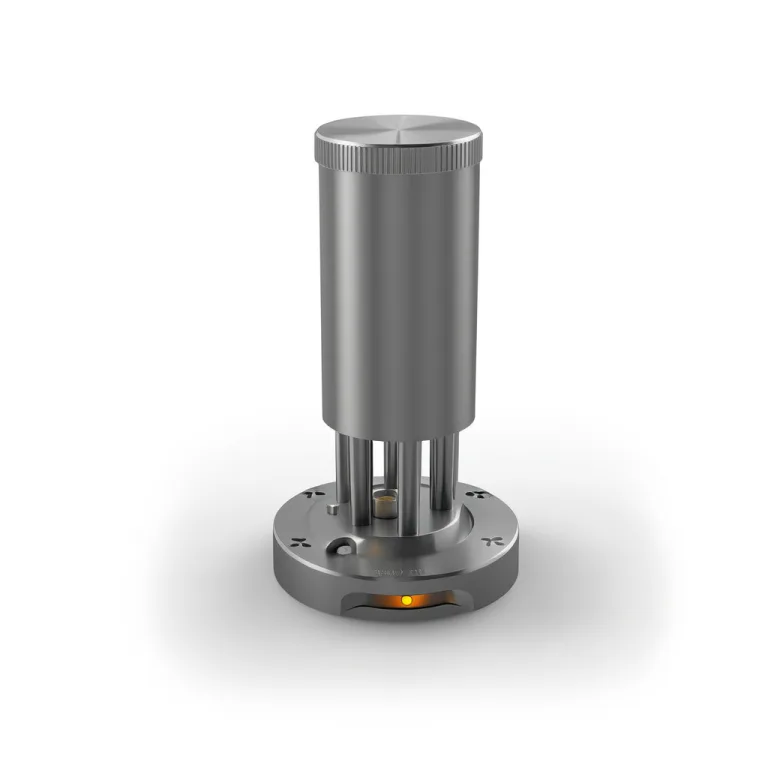
Construction Concrete Maturity Sensor
Construction Concrete Maturity Sensor for industrial applications.
About Construction Concrete Maturity Sensor
Construction Concrete Maturity Sensor for industrial applications.
| Domain | build |
|---|---|
| Product Family | Sensors |
Who Works With Construction Concrete Maturity Sensor?
4 engineering roles are connected to Construction Concrete Maturity Sensor based on verified research evidence.
Materials Engineer
Materials Engineer is a widely recognized professional engineering role. In the context of a Ceramic Ball Mill — a product whose performance critically depends on ceramic material properties (e.g., wear resistance, thermal stability, fracture toughness) — a Materials Engineer contributes to material selection, formulation optimization (evidenced by 'knowledge of ceramic formulations'), design validation, and testing of ceramic components (e.g., liners, grinding media). While specialization in ceramics is implied, 'Materials Engineer' remains the canonical, discipline-level role; 'Ceramic Materials Engineer' would be a specialization but is not the input text.
Quality Control Manager
Quality Control Manager is a widely recognized professional role in construction and industrial manufacturing, responsible for overseeing quality systems, verification protocols, and compliance with standards (e.g., DOT, ASTM C1074). In this context, the role directly specifies sensor use, inspects calibration and data integrity, oversees maturity curve validation (a testing function), and manages overall quality processes tied to the Concrete Maturity Sensor deployment.
Field Engineer
Field Engineer is a widely recognized professional role in oil & gas and industrial engineering, especially in downhole tool support. Evidence confirms SLB employs Field Engineers specifically for downhole mud motor applications—including specification, field supervision (installation/commissioning), failure analysis (troubleshooting/maintain/test), and operational optimization. While context is chemical/oilfield, 'Field Engineer' is not product-specific (e.g., not 'Mud Motor Field Engineer'), so canonical form remains generic and standardized.
Construction Technician
Concrete Technician is a recognized occupational title in construction, particularly in quality control, curing monitoring, and non-destructive testing contexts. While 'Concrete' specifies the material domain, the role is not product-specific to the maturity sensor itself — rather, it denotes a technician trained in concrete-related field procedures including sensor installation and data interpretation per ACI 301/318 and ASTM C1074. The canonical form generalizes to 'Construction Technician' to reflect broader industry recognition, while retaining specialization context.